
JAPANESE TEXTILES TECHNIQUES

Shibori resist
With a 1500 year history in Japan, Shibori, or the inventive art of shaped resist as defined by Yoshiko Iwamoto Wada is the collective term for a multiplicity of bound, stitched, folded, clamped and pole bound methods of creating pattern on textiles.
Patterns are traditionally dyed using indigo, although the techniques were also applied to beautiful natural dyed silk fabrics as well.
The commonality between the techniques lies in the compression of the fabric in order to keep the dye out of certain areas and the contrast between the dyed and undyed parts is what makes the patterns.
Intricate patterns can be created and some techniques require many hundreds of hours to complete.
Shibori is primarily now mainly only practised in Japan in Kyoto, Nara and Arimatsu (a suburb of Nagoya).

Boro mending
Boro (or more accurately “Boro boro”) means “rags and tatters” in Japanese and refers to the endlessly patched and repaired clothing and bedding made by the very poorest farming people in Japan. Unable to buy new fabric, clothing or bedding, they cobbled together whatever scraps they could find and endlessly mended these fabrics, sometimes over many generations.
Boro fabrics are typically made up of plain fabrics (frequently indigo), stripes and checks. But pieces can often include Shibori resist, Katazome stencilled and Kasuri space woven textiles.
It is hard to date Boro fabrics as the original piece could have been created with contemporary fabrics and much older ones and each mend could also be applied with old or new fabrics at the time of mending.
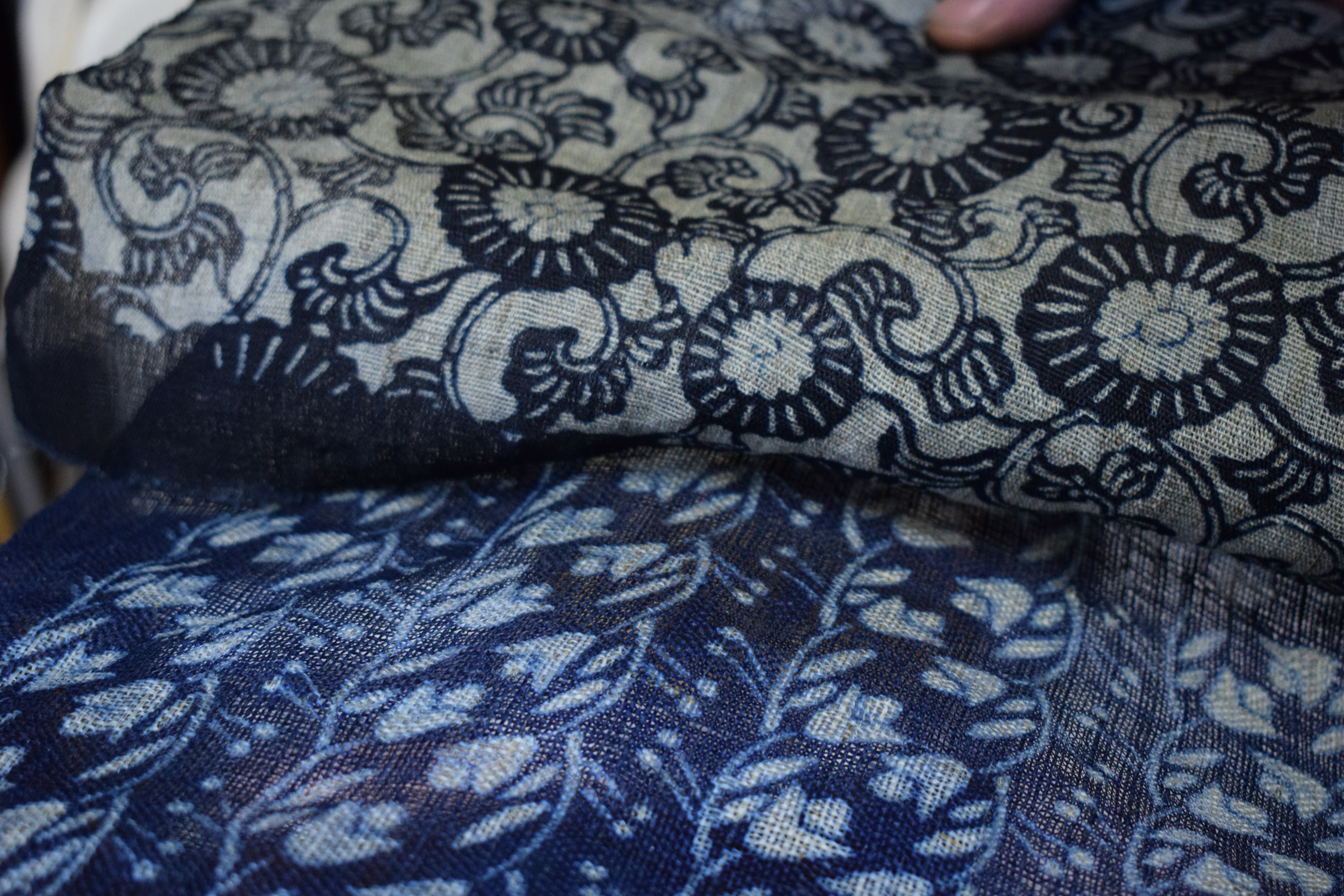
Katagami/Katazome stencil resist
Katagami stencilling came into being as a means to create intricate, crisp patterns from finely cut handmade paper stencils. “Kata” means pattern in Japanese and “game’ is the word for paper.
Katagami stencil cutting is a highly skilled craft with a ten year apprenticeship. The use of stencils to dye fabric with a rice paste resist is known as Katazome and is practiced by a different group of equally talented craftspeople.
Katagami originated in Ise in Mie prefecture and is still the home of the papermaking and stencil cutters.
Even the creation of the “Kakishibugami” stencil paper involves complex processes. Handmade Mulberry paper is laminated together with the 5 year aged juice of the Persimmon of “Kakishibu” to concentrate the tannins and make it waterproof. The paper is then smoked and stored for up to 5 years.

Kogin counted thread sashiko
Kogin counted thread sashiko embroidery originated in the cold, Northern part of Honshu (Japan’s main island) in Hirosaki City. It was used to decorate Sunday best jackets to go to the temple and was comprised of repeating motifs in the form of squares arranged in a diamond formation to create panels of pattern.
The process is painstaking and slow and it can take many hours to complete a large piece of work.
There are around 45 standard patterns called “Modoko” which form the basic language of Kogin and here most commonly used.
Originally only white thread on very dark blue indigo fabric was used until the advent of the railway when colour came to Hirosaki City.
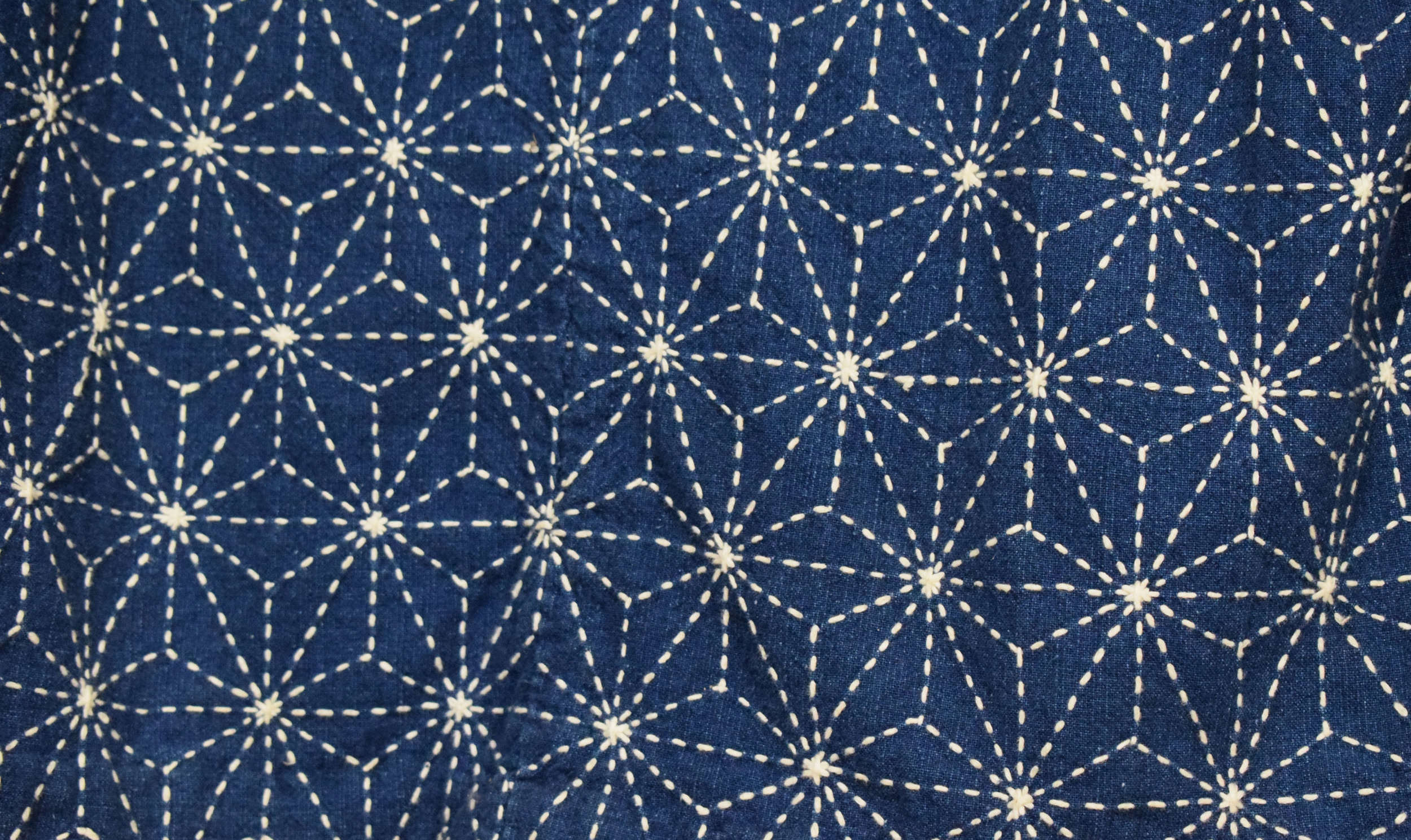
Sashiko embroidery
Sashiko, derived from the Japanese verb “Sasu” meaning “to stab'“ or “to pierce”, was a country craft used to decorate clothing and homewares
Typically stitched by poor farming women, the skill was so highly prized it affected a young girl’s chances of marriage. (Being good at Sashiko meant you had to be patient and persevere to make good work, vital qualities in a farmer’s wife).
Moyozashi sashiko patterns are created using evenly spaced running stitches that never touch and can be connected to make larger patterns.
Hitomezashi sashiko patterns are created by stitching the horizontal pattern stitches and then the vertical pattern stitches to a grid. The pattern is formed where the stitches meet.
Kugurizashi sashiko involves weaving threads through foundation stitches to make highly intricate patterns.

Kasuri woven textiles
Kogin counted thread sashiko embroidery originated in the cold, Northern part of Honshu (Japan’s main island) in Hirosaki City. It was used to decorate Sunday best jackets to go to the temple and was comprised of repeating motifs in the form of squares arranged in a diamond formation to create panels of pattern.
Kasuri was supposedly invented at the end of the Edo period (1615-1868) by a young Japanese girl called Den Inoue. Den discovered some white irregularities in her weaving and decided to turn the defect into a decorative device.
The Kurume region on the island of Kyushu in the South West of Japan is one of the main centres for Kasuri and one of the few places in Japan where Kasuri is still being made.